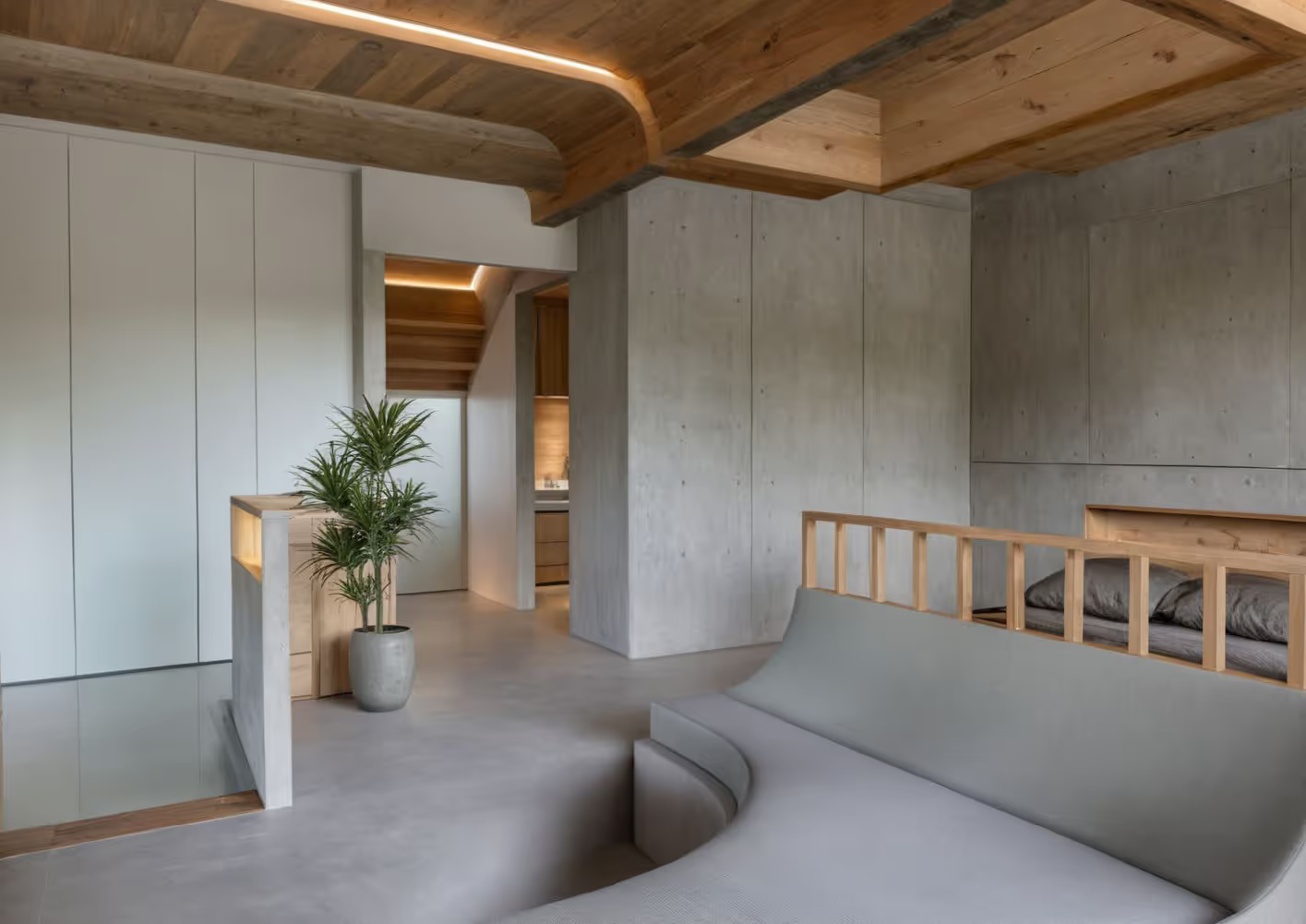
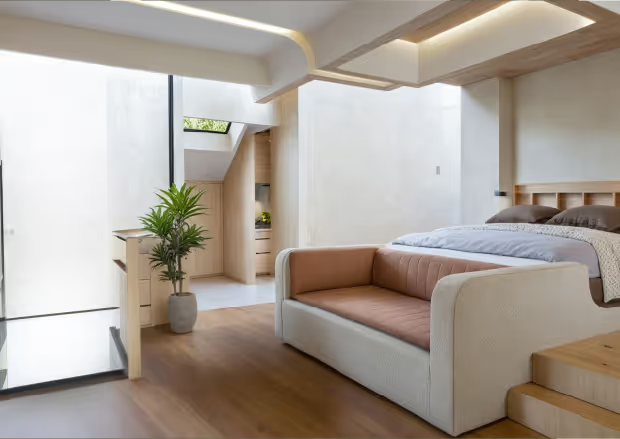
- A good space can add light, space, and value. Often being smaller, simpler, and cheaper.
- The goal is a bespoke design that fits your budget.
- Many extensions don't require planning permission, but the rules can be tricky.
- Be careful: people often misunderstand the legal position. Many councils have very different interpretations of the law and how they typically apply those laws.
- We are well versed in these laws, and how these laws are commonly applied by various different Local Planning Authorities. Call us to check: we can offer helpful steers and flag any issues early.
Pages 19-20 of Schedule 2, part B - additions etc to the roof of a dwellinghouse - of The Town and Country Planning (General Permitted Development) (England) Order 2015, reads:-
Class B – additions etc to the roof of a dwellinghouse
Permitted development
B. The enlargement of a dwellinghouse consisting of an addition or alteration to its roof. Development not permitted
B.1 Development is not permitted by Class B if—
(a) permission to use the dwellinghouse as a dwellinghouse has been granted only by virtue of Class M, N, P or Q of Part 3 of this Schedule (changes of use);
(b) any part of the dwellinghouse would, as a result of the works, exceed the height of the highest part of the existing roof;
(c) any part of the dwellinghouse would, as a result of the works, extend beyond the plane of any existing roof slope which forms the principal elevation of the dwellinghouse and fronts a highway;
(d) the cubic content of the resulting roof space would exceed the cubic content of the original roof space by more than—
(i) 40 cubic metres in the case of a terrace house, or
(ii) 50 cubic metres in any other case;
(e) it would consist of or include—
(i) the construction or provision of a verandah, balcony or raised platform, or
(ii) the installation, alteration or replacement of a chimney, flue or soil and vent pipe; or
(f) the dwellinghouse is on article 2(3) land.
Conditions
B.2 Development is permitted by Class B subject to the following conditions—
(a) the materials used in any exterior work must be of a similar appearance to those used in the construction of the exterior of the existing dwellinghouse;
(b) the enlargement must be constructed so that—
(i) other than in the case of a hip-to-gable enlargement or an enlargement which joins the original roof to the roof of a rear or side extension—
(aa) the eaves of the original roof are maintained or reinstated; and
(bb) the edge of the enlargement closest to the eaves of the original roof is, so far as practicable, not less than 0.2 metres from the eaves, measured along the roof slope from the outside edge of the eaves; and
(ii) other than in the case of an enlargement which joins the original roof to the roof of a rear or side extension, no part of the enlargement extends beyond the outside face of any external wall of the original dwellinghouse; and
(c) any window inserted on a wall or roof slope forming a side elevation of the dwellinghouse must be—
(i) obscure-glazed, and
(ii) non-opening unless the parts of the window which can be opened are more than 1.7 metres above the floor of the room in which the window is installed.
Interpretation of Class B
B.3 For the purposes of Class B, "resulting roof space" means the roof space as enlarged, taking into account any enlargement to the original roof space, whether permitted by this Class or not.
B.4 For the purposes of paragraph B.2(b)(ii), roof tiles, guttering, fascias, barge boards and other minor roof details overhanging the external wall of the original dwellinghouse are not to be considered part of the enlargement.
The “small print”…
Just Plans is a Limited Company Companies House reference 10113657
By “advice” or “consultancy”, we mean that we are generally happy to offer provisional thoughts and suggestions to homeowners and other existing or potential clients, based on our experience of having submitted hundreds of planning applications for many different properties for many different councils over more than a 20 year period.
Because of this and other similar experience, many people who are considering a project find it useful to talk us through their plans. At our reasonable discretion, we are generally happy to spend some unpaid time listening and walking people through the general process and the typical different options that they might like to consider.
Any such advice or consultancy is limited to provisional and general guidance. The risks and rewards associated with any project or decision exclusively remain the homeowner’s or the developer’s, unless we have explicitly stated otherwise in writing and have been paid to share in such risk or such responsibility.
Likewise, we assume no liability for taking on any “due diligence”, any CIL negotiation, or accurately predicting the Local Authority’s decisions, and which includes those pertaining to lawful development certificates.
Unless explicitly stated otherwise in writing, and unless we have received payment for the same, we do not agree to act as Principal Designer, or as any Dutyholder, or similar, whether or not it forms part of RIBA or RICS or any similar legislation.
Unless otherwise agreed in writing, we always act exclusively as our clients’ agents, and under their authority. We agree jobs on a case by case basis, always evidenced in writing, and never on a merely verbal basis.
Footnote 1.
Re CGIs and imagery
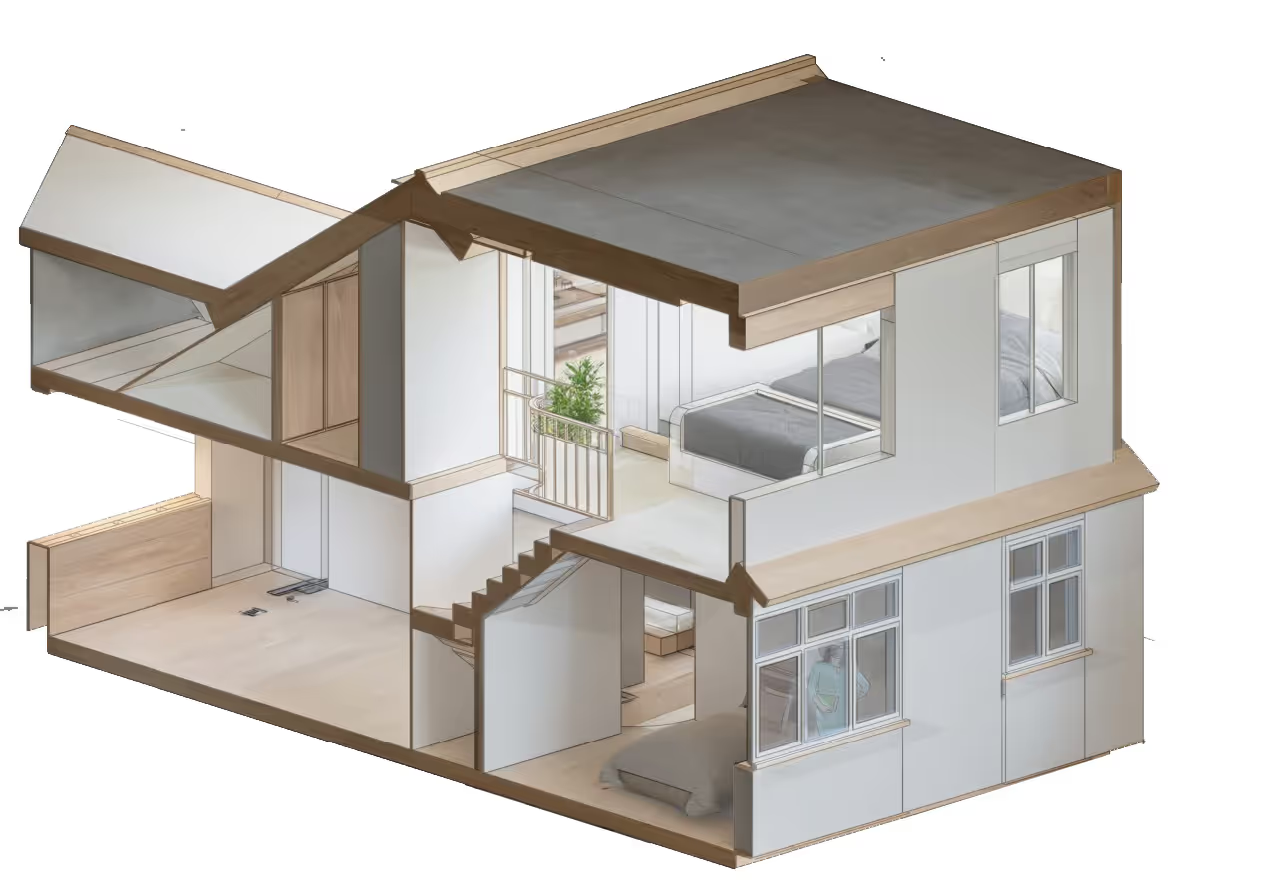
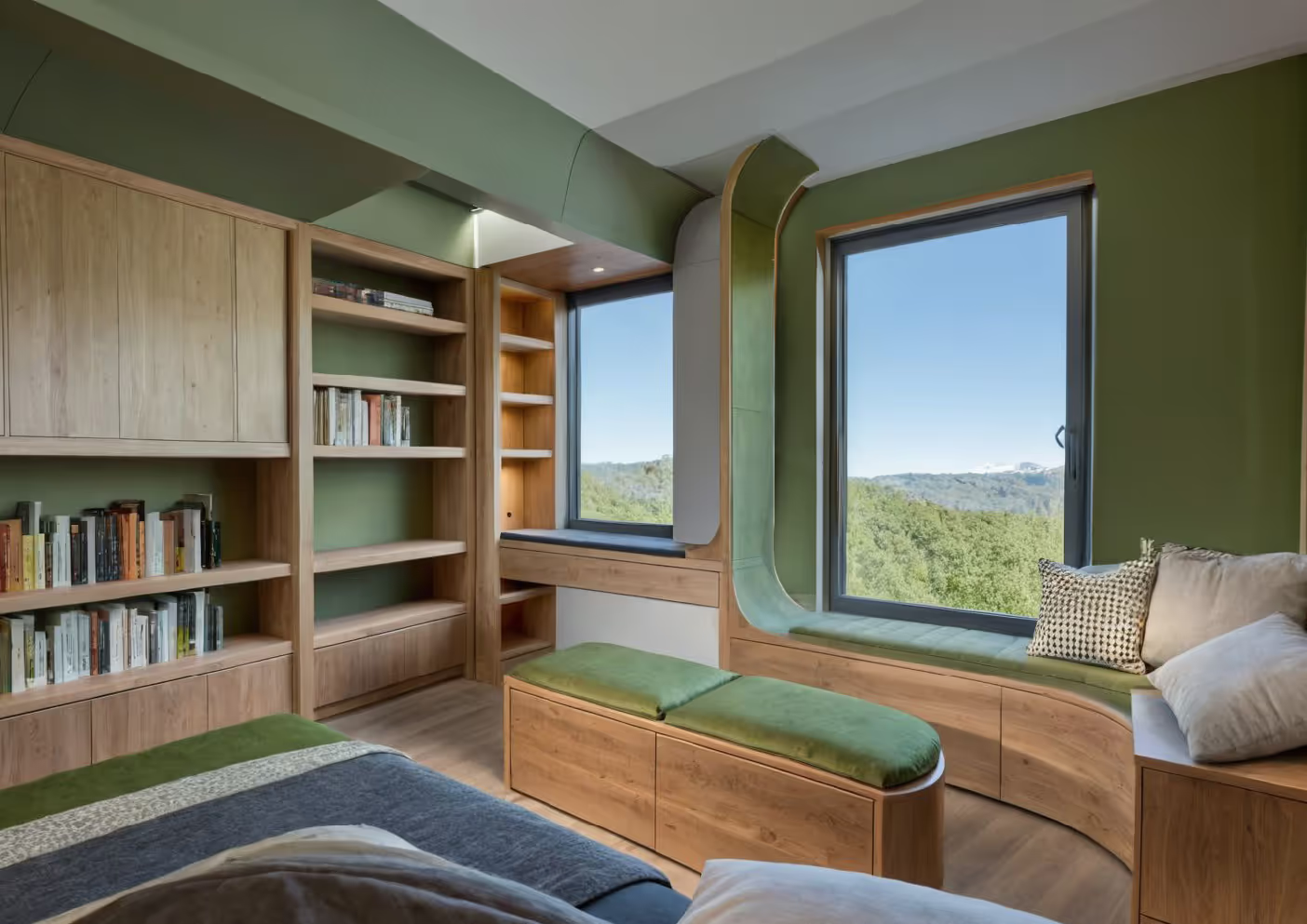
The images contained within our website typically use a combination of photographs and drawing software. CGIs may not be identical to the as-built layouts.
For full terms of service and for how our plans should be used, refer also to the right hand margin of any plan supplied.



.avif)